


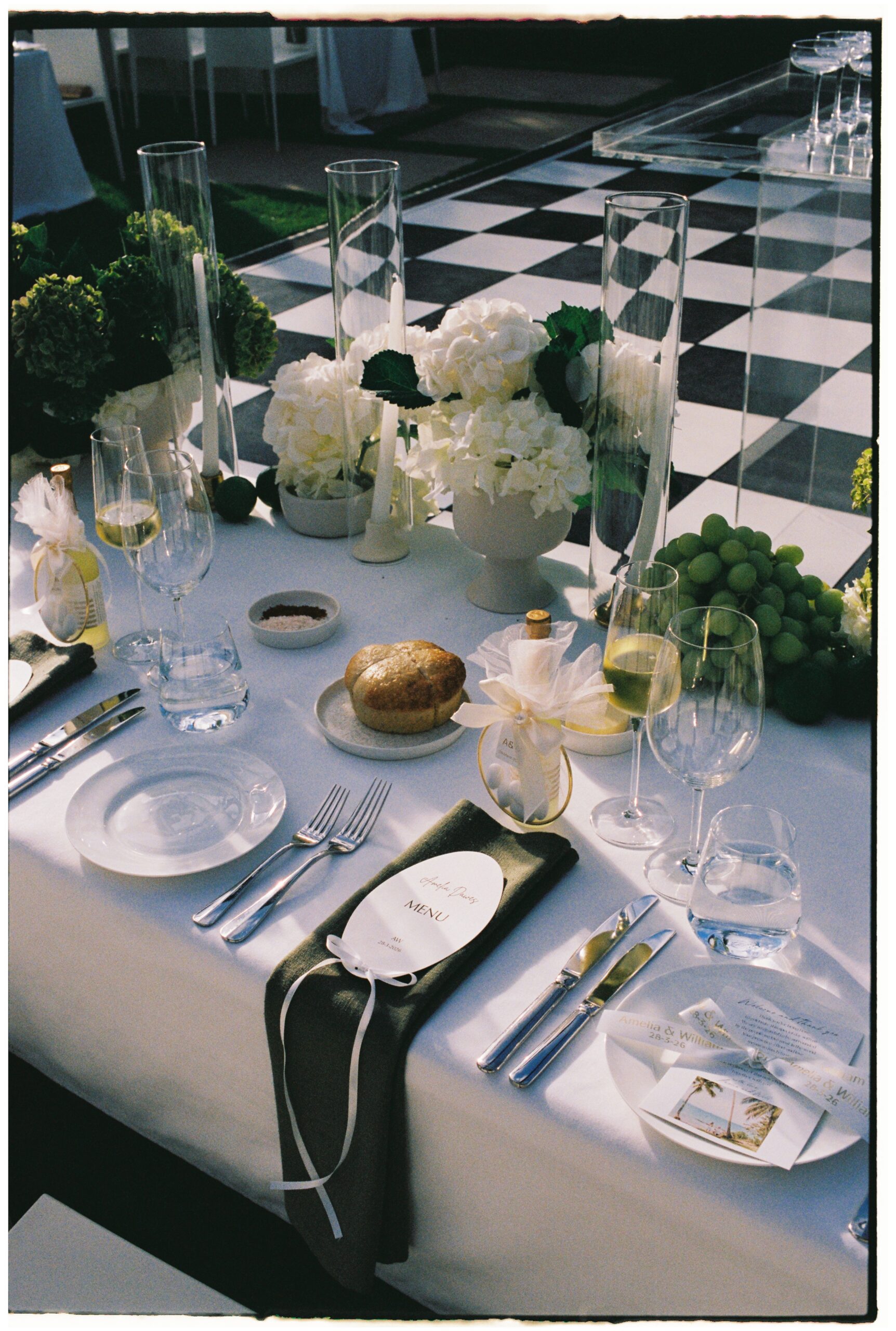
Film and Digital Wedding Photography: Why I Love Both on a Wedding Day
Couples ask me about film and digital wedding photography more than almost anything else. Film or digital? Which is better? Which will make their day look the way they want it to feel?
My honest answer: I shoot both, and I wouldn’t have it any other way.
Not because I’m hedging, or because hybrid wedding photography is a smart marketing position. Because after years of working with both mediums, I’ve come to understand what each one does that the other simply can’t. And used together, intentionally, they produce something neither could on its own.
What Film Brings to a Wedding Day
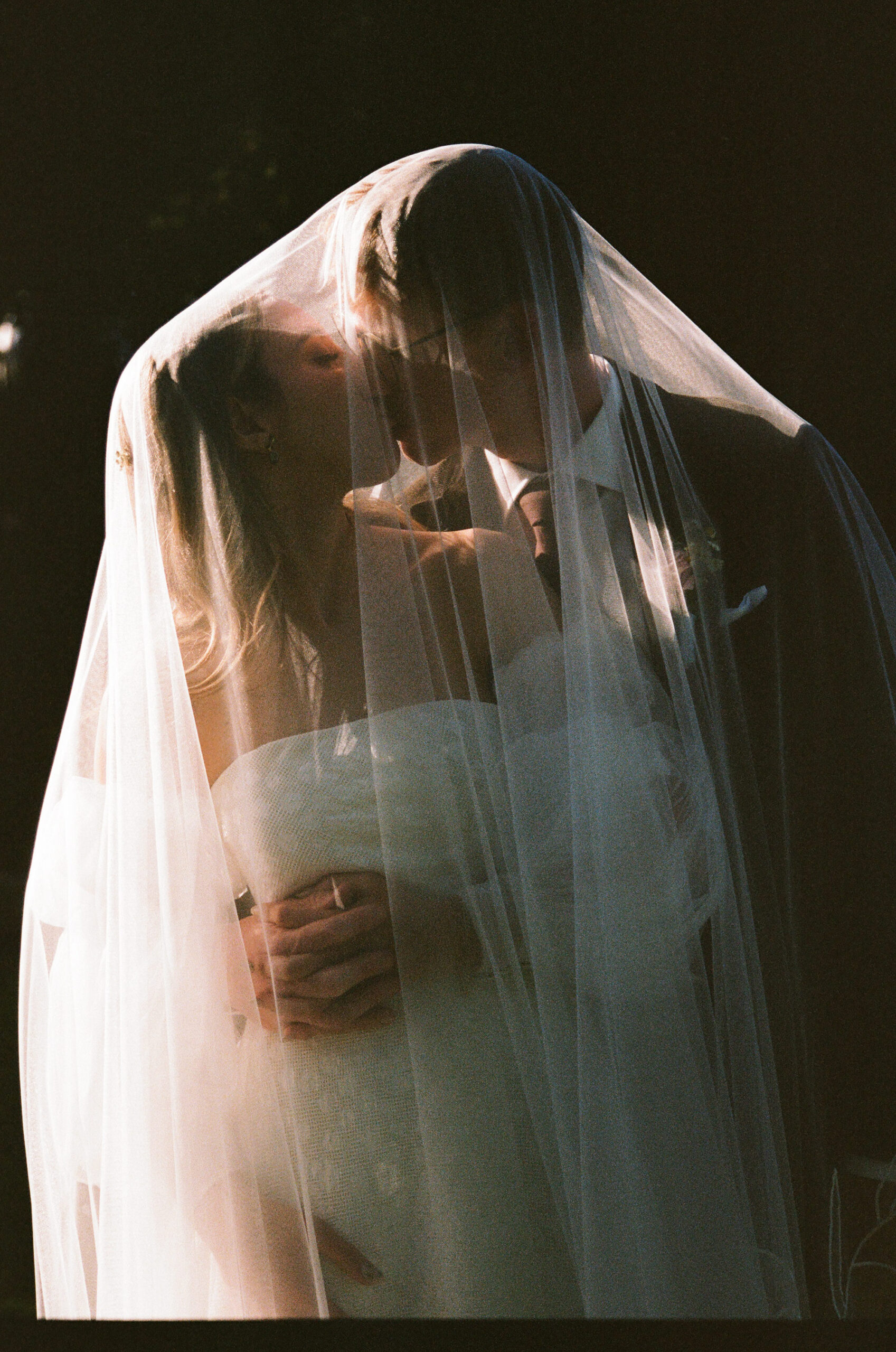
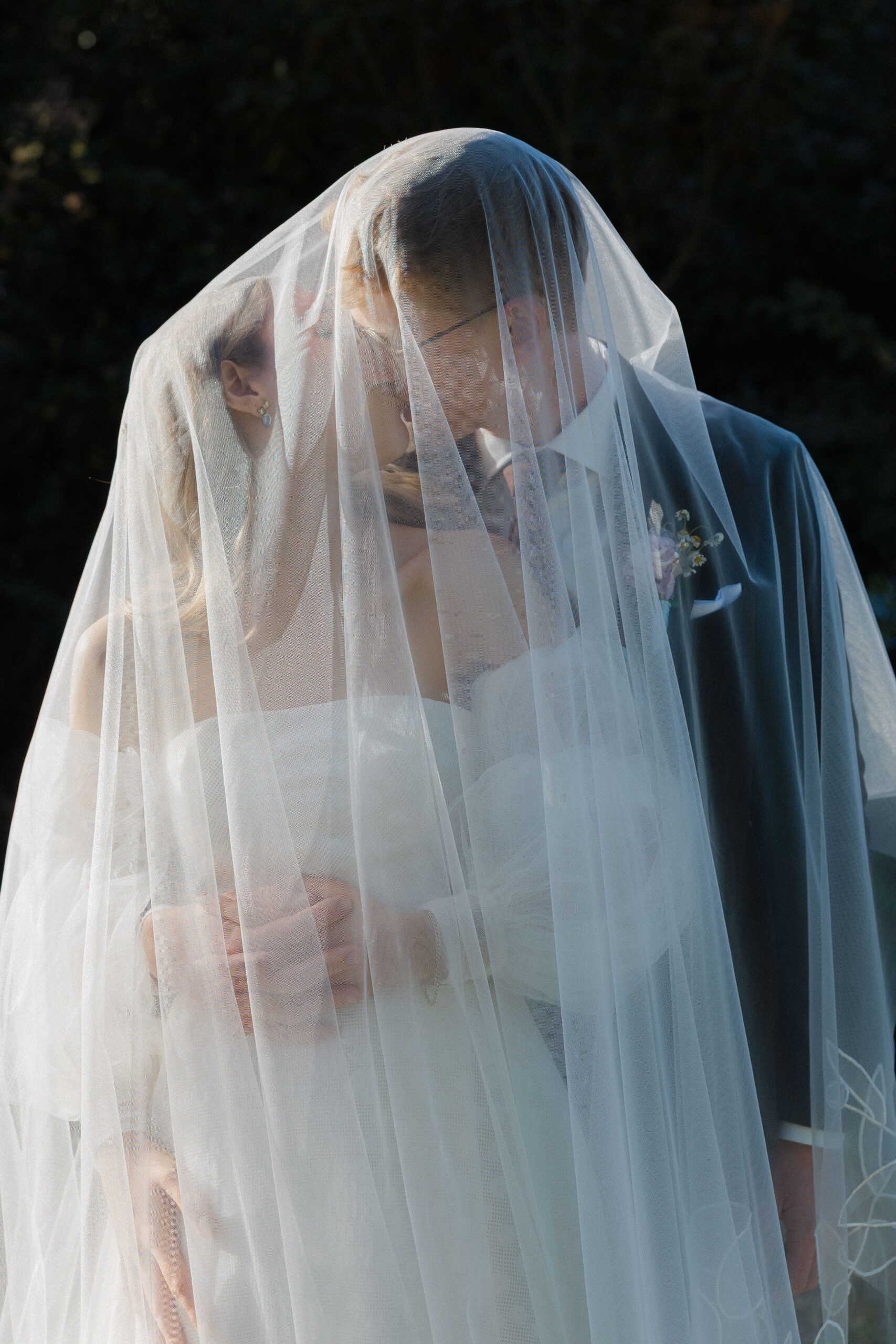
I carry two film cameras to most weddings. My Pentax, which was my dad’s in the 90s and has been with me ever since, and my Canon EOS-1, a 35mm workhorse that handles beautifully in almost any light. Between them, they go everywhere.
Shooting on film changes how I see. There’s no instant review, no “let me just check that.” You meter the light, you compose, you decide, and you commit. With a standard roll giving you 36 frames, every one of them costs something. That constraint is the whole point. It makes you slower in the best possible way.
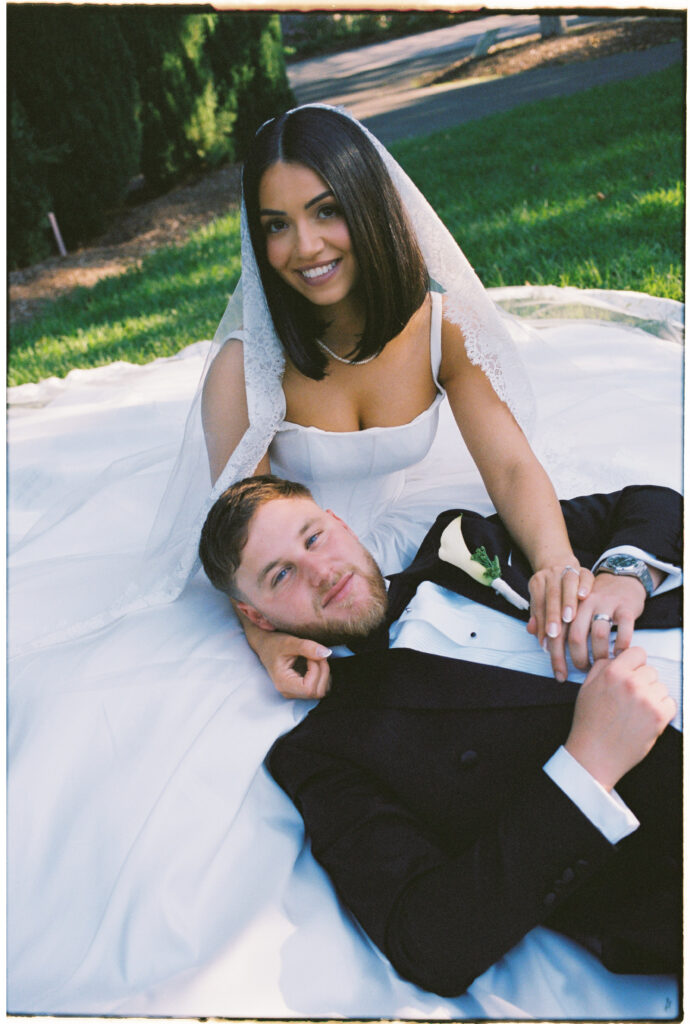
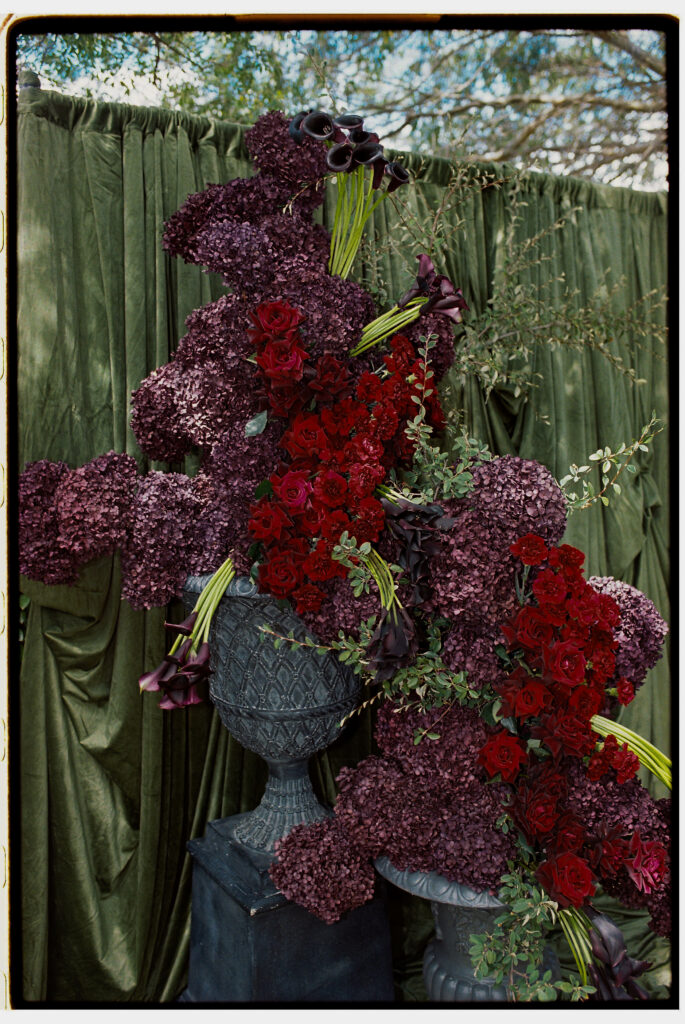
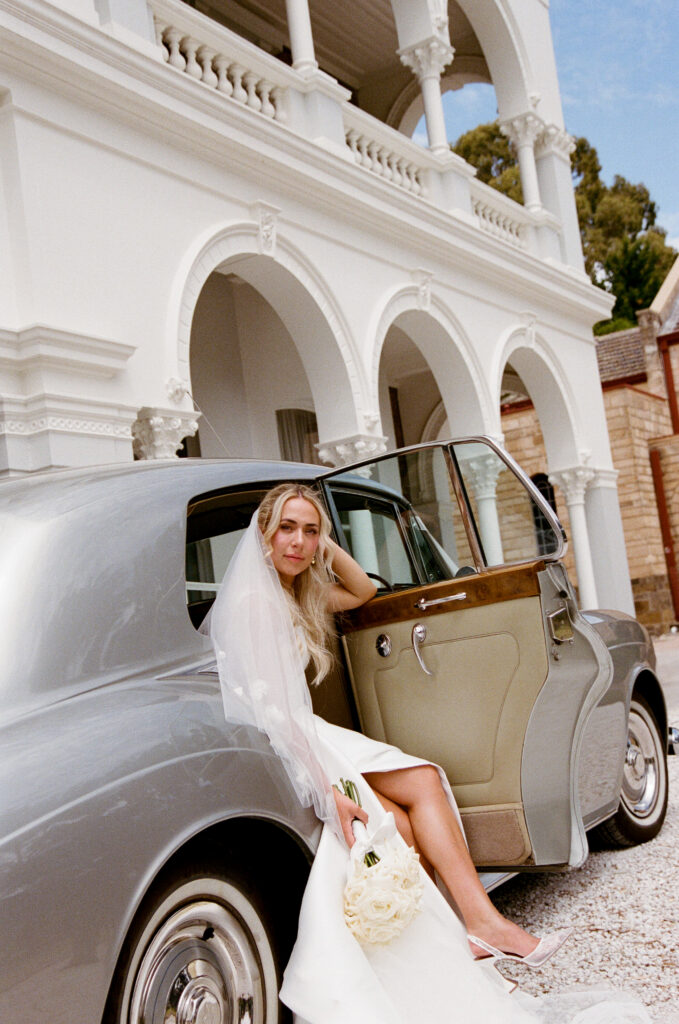
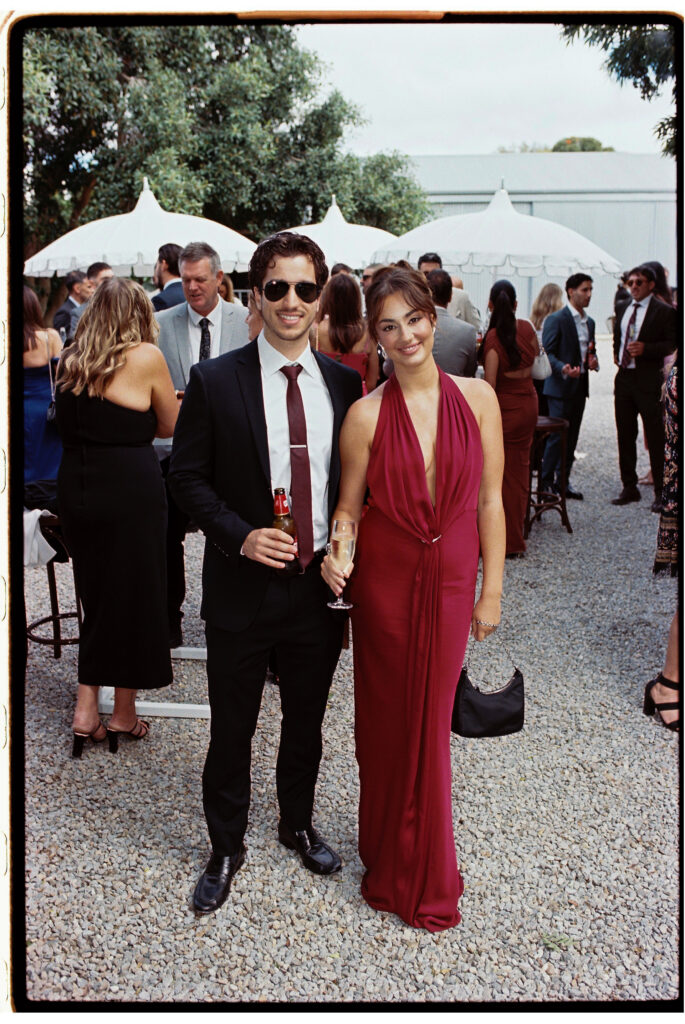
What film does to light is unlike anything digital replicates convincingly. The way it renders skin tones in the soft afternoon. The grain that appears in shadow. Highlights that roll off gently rather than clipping to white. There’s a warmth and a texture to film that I’ve never been able to fully achieve in post-processing, no matter how good the presets have gotten.
For portraits, quiet ceremony moments, the getting-ready hours, golden hour, the long table at dinner while the light is still good, film is where I reach first. These are the frames that tend to end up printed, hung on walls, passed down.
What Digital Makes Possible
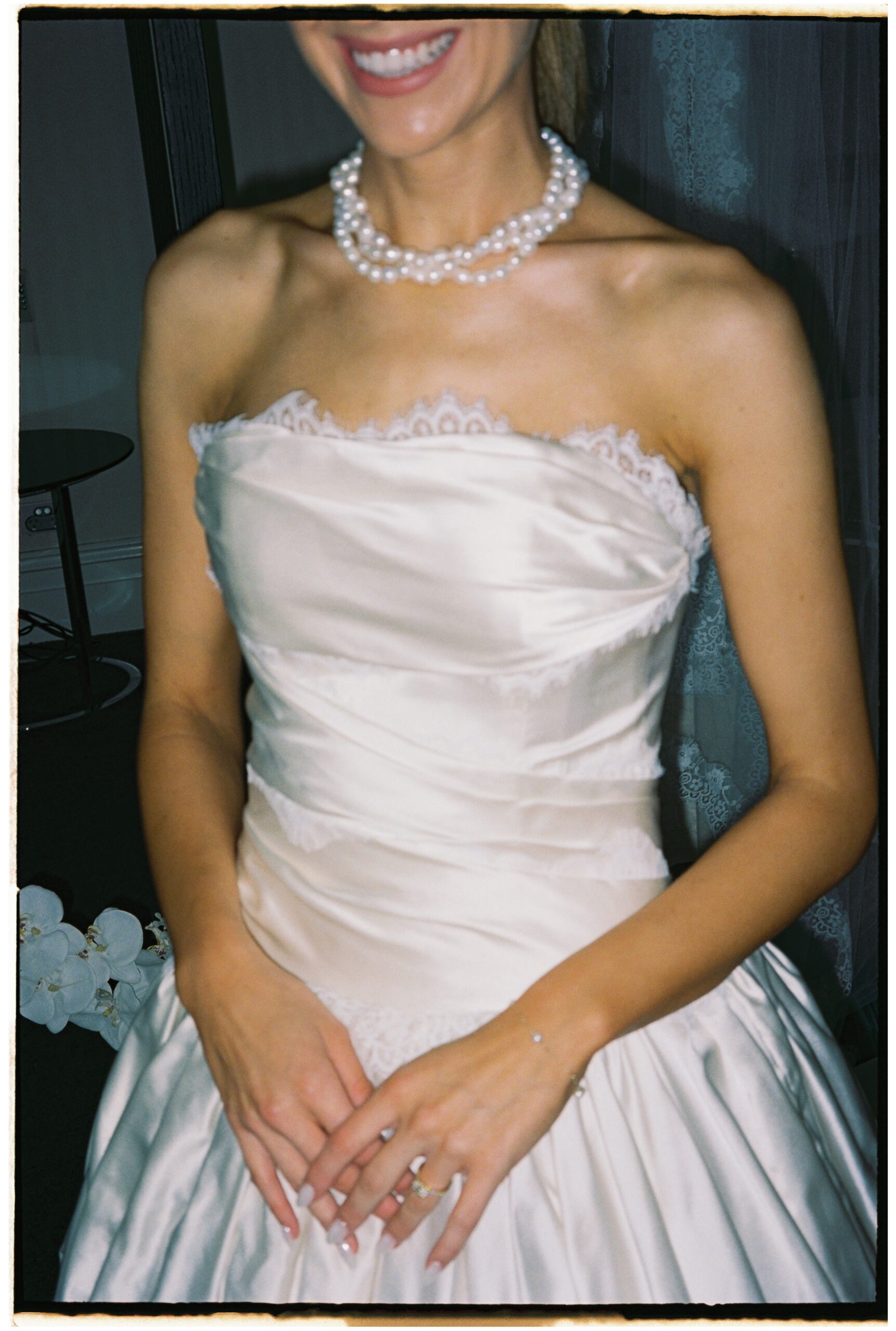
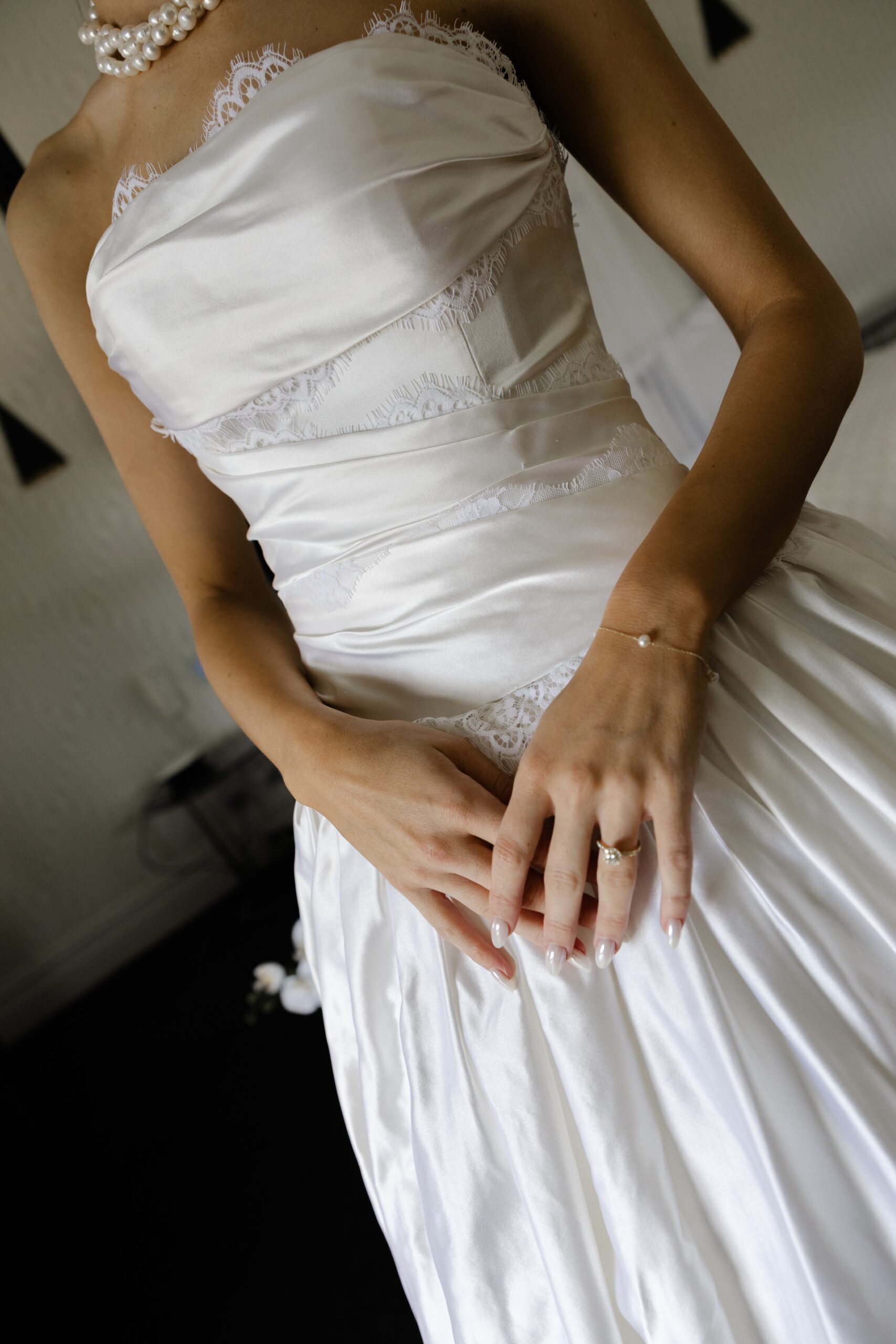
I’m equally devoted to my digital cameras. Not as a backup or a compromise, but as the right tool for a significant portion of what a wedding day actually is.
Weddings move. The ceremony doesn’t pause while you change rolls. The first kiss happens once. The dance floor at 10pm is dark and loud and full of joy that needs to be caught in a fraction of a second. Digital handles all of this with a reliability and speed that film simply wasn’t designed for.
Modern digital cameras perform in low light that would have been unworkable even five years ago. Indoor ceremonies, candlelit receptions, a venue where the only light is coming through stained glass at 11am. These are moments I want complete coverage of, and digital gives me that without compromise.
There’s also something to be said for shooting freely. Digital lets me experiment, try an angle, follow a moment through its whole arc without the back of my mind counting frames. Some of the most important images from a wedding day are the ones you weren’t sure about until you saw them later.
How Hybrid Film and Digital Wedding Photography Works Together
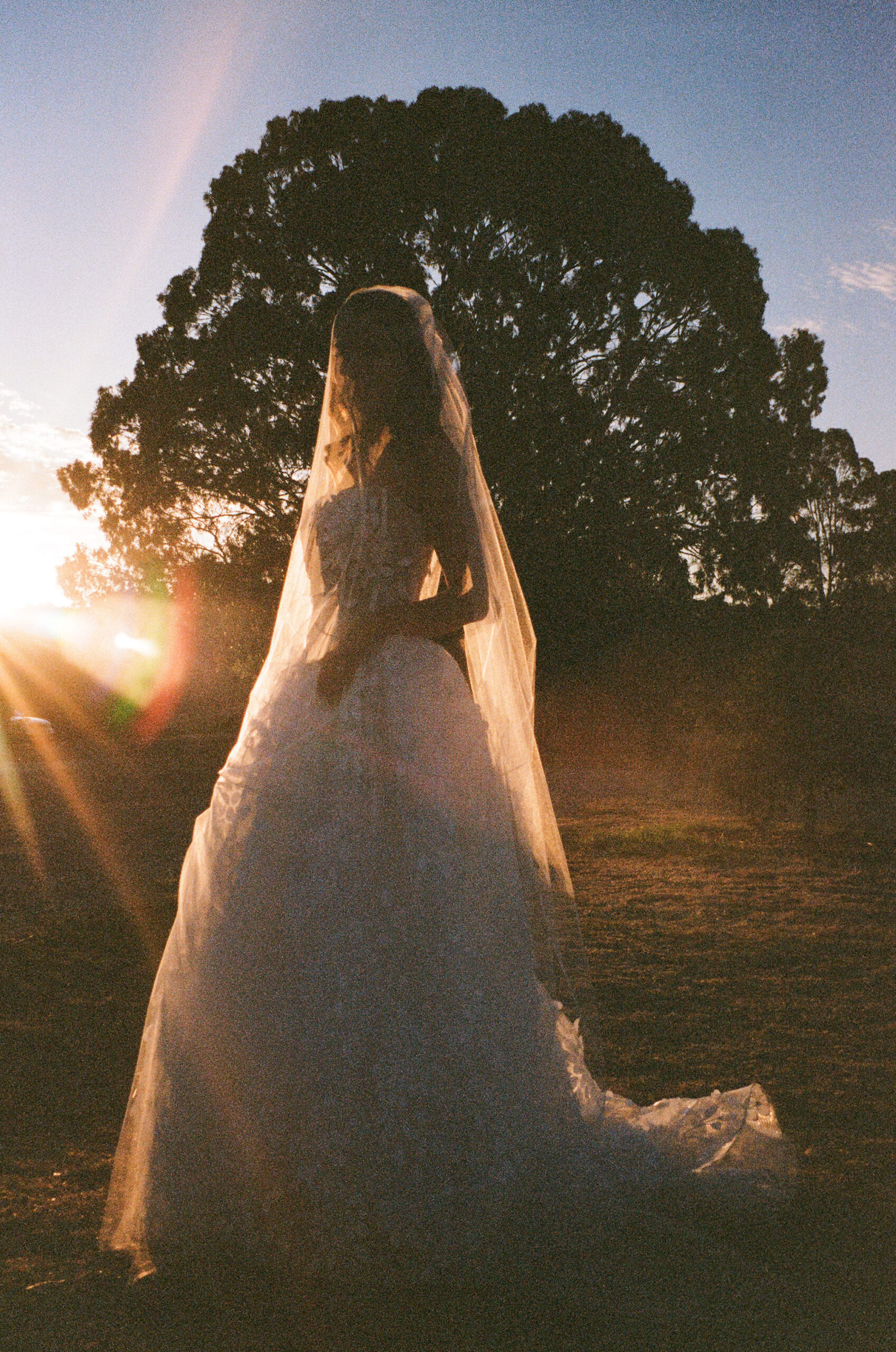
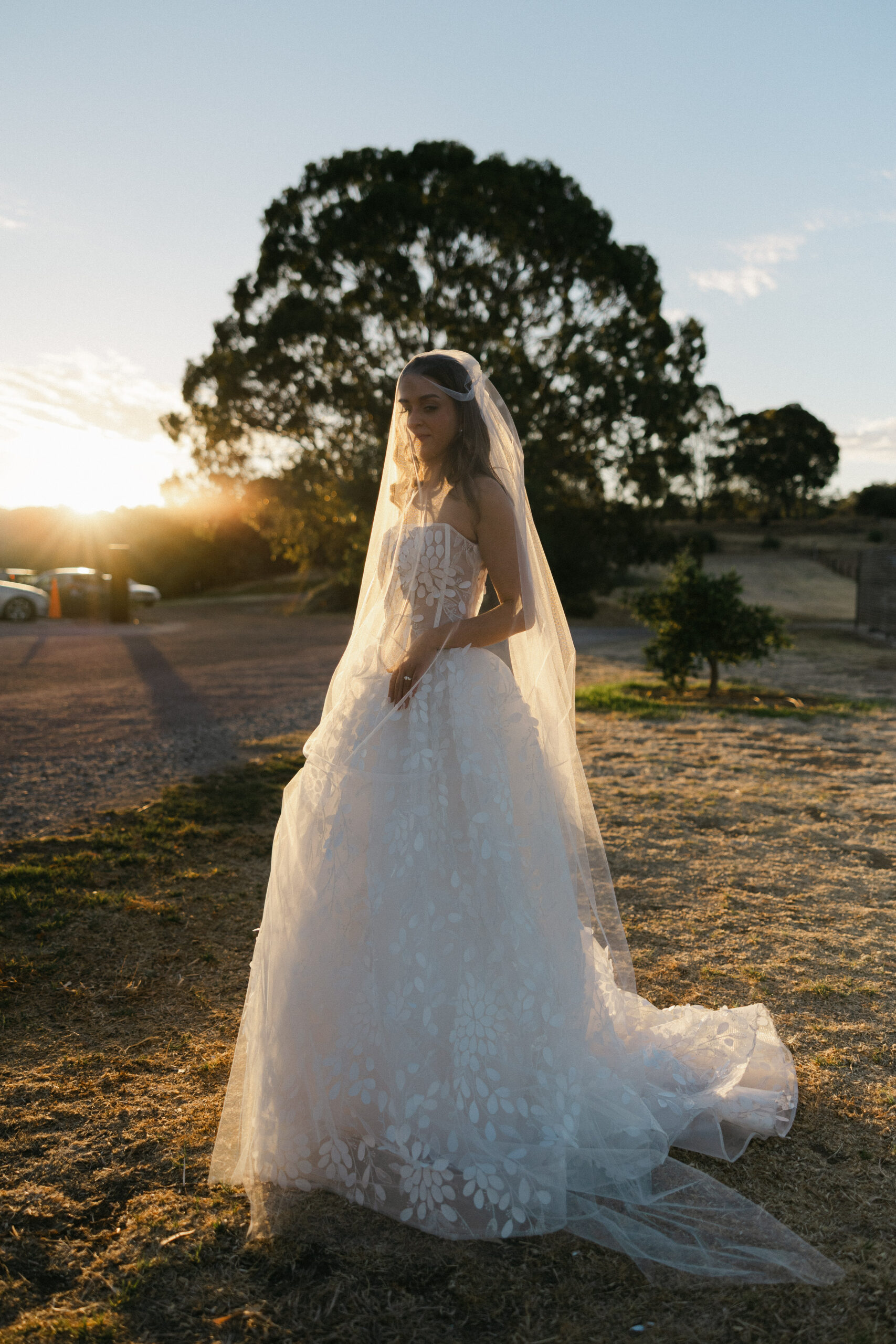
The term hybrid wedding photographer gets used a lot, but what it means in practice varies enormously. For me, it’s not a formula. It’s a constant, instinctive read of what’s in front of me.
I bring both cameras to every wedding. I reach for film when a moment has stillness, good light, and emotional weight that deserves the slower, more deliberate process. I reach for digital when things are moving fast, light is challenging, or I need the certainty of coverage over the beauty of grain.
For couples who want more film throughout their day, or where the day is structured in a way that makes extensive film coverage realistic, I also love working with a second shooter. Having someone I trust on digital while I’m working the film cameras, or splitting coverage across a larger venue, makes a real difference to how cohesive the final gallery feels. It’s something we can talk through before you book.
What matters in hybrid shooting isn’t the ratio. It’s the coherence. A gallery that moves between film and digital should feel like one thing, not two different days edited together.
What This Means for Your Gallery
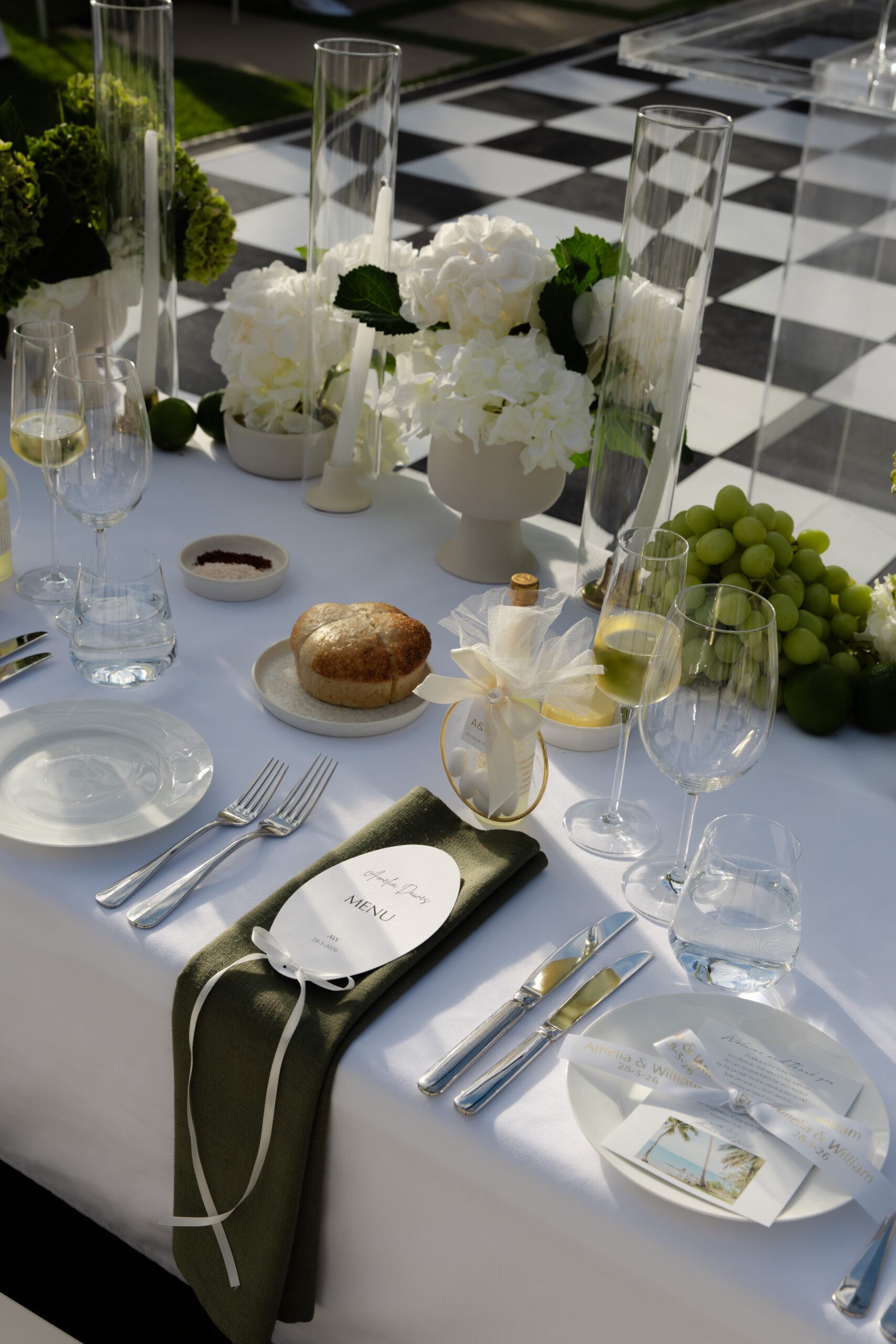
The images you receive from a hybrid wedding day will have a quality you can’t quite name at first. Some frames have that unmistakable film depth. Others are sharp, immediate, full of energy. But together they read as a complete story, not a technical exercise.
The film frames tend to be the ones you print. The ones you frame. If you’re thinking about printing, I send all my film to Ikigai in Melbourne. The quality of their scans and prints is worth knowing about.
The digital frames are often the ones that make you laugh, catch something you didn’t see at the time, document the whole room when only part of it was quiet enough for film.
The photographs from your wedding day are going to outlast almost every other decision you make about it. The florals, the cake, the dress folded away in a box. What remains is the images, and how they feel to look at ten years from now. That’s what drives every choice I make about which camera is in my hand.
Film and Digital Wedding Photography at a Glance
- What it is: shooting both 35mm film and digital cameras within the same wedding day
- Another name for it: hybrid wedding photography
- Digital photography is best for: ceremonies, receptions, low light, fast-moving moments
- Film photography is best for: portraits, quiet moments, getting ready, golden hour
- The result: a gallery that feels layered and complete rather than uniform
- Who it suits: couples drawn to warmth, texture, and images that feel more real than posed
Film and Digital Wedding Photography: Frequently Asked Questions
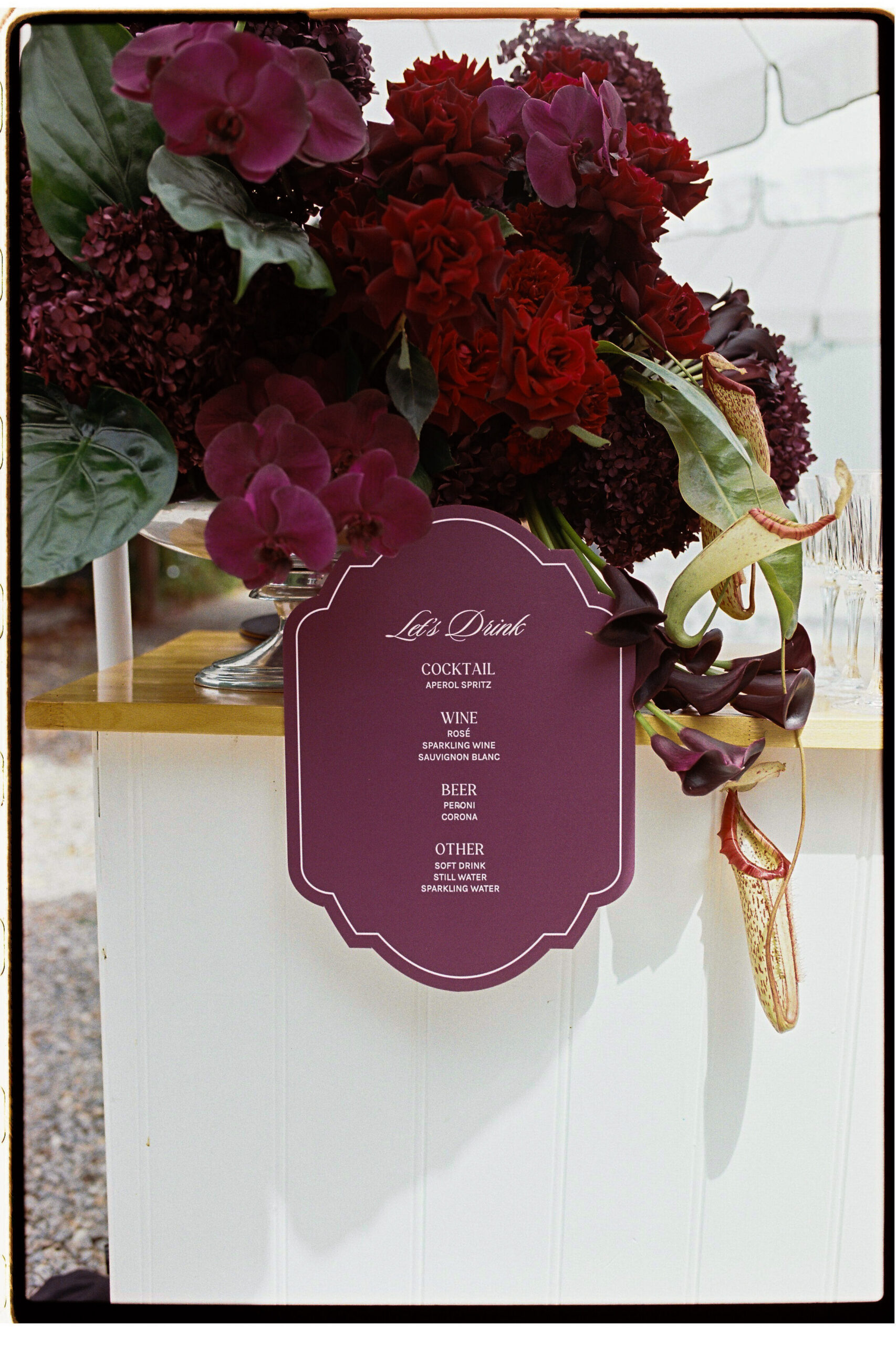
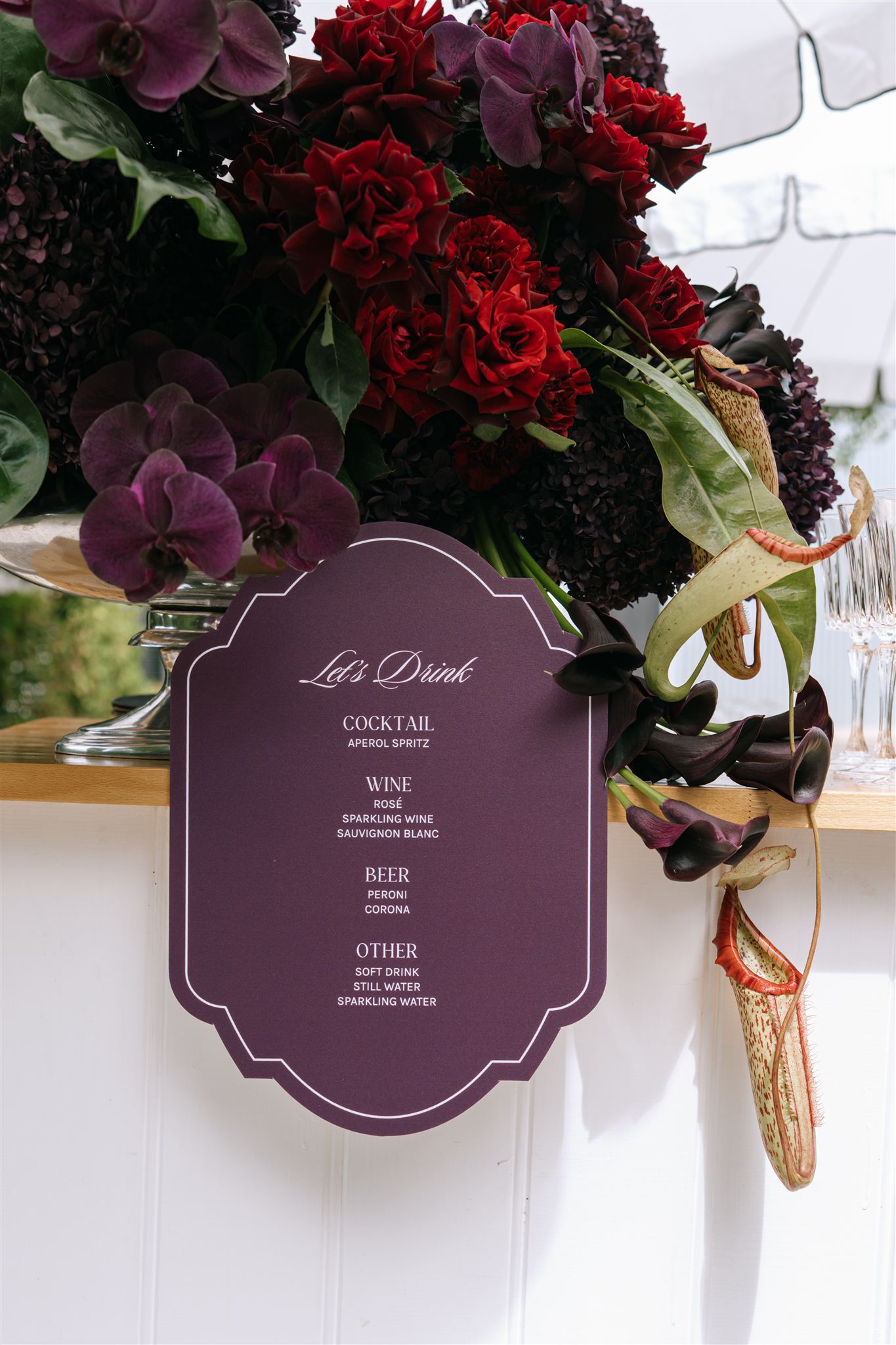
A hybrid wedding photographer shoots on both 35mm film and digital cameras on a wedding day. The two mediums work differently: digital is fast and responsive, well suited to ceremonies and any moment that moves quickly. Film is slower and more deliberate, with a warmth and grain that digital editing can approximate but not quite replicate. A photographer who works with both isn’t doing so as a stylistic add-on. They’re using each medium for what it actually does well.
Yes, each roll of film costs money to buy and to have professionally developed and scanned at a quality lab. That’s reflected in how I structure my packages. It’s also why I’m honest about the number of film frames you can expect rather than promising something the medium isn’t designed to output. The investment is worth it for couples who want it, but it’s not the right fit for everyone.
No, a photographer shooting film intentionally misses fewer moments, because they’re more present and more selective. The moments that are irreplaceable get digital coverage. Film is where I go when I have the space to be deliberate, not when I’m hoping for the best.
Look at the images you’ve saved. Not the ones you saved because they were technically impressive, but the ones that stopped you. If you keep coming back to photographs with warmth, texture, a slightly imperfect quality that makes them feel more real than posed, you probably want film. If you’re drawn to sharp, vivid, high-energy coverage of every moment, digital will serve you beautifully. Most couples who find their way to my work already know which way they lean. If you’re not sure, we can talk through it properly before you decide anything.
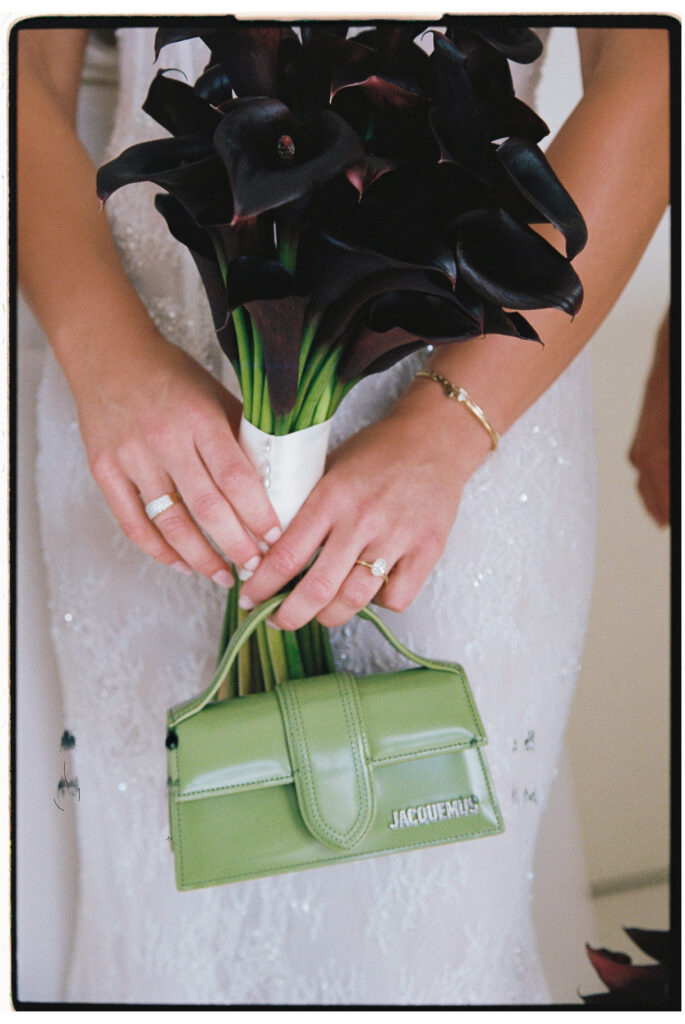
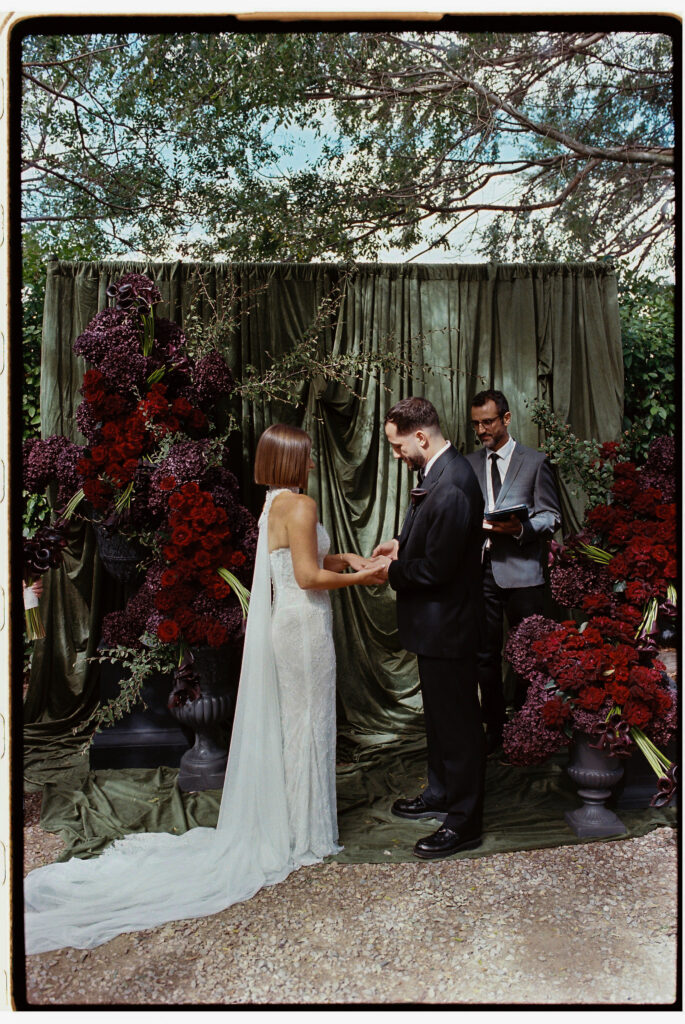
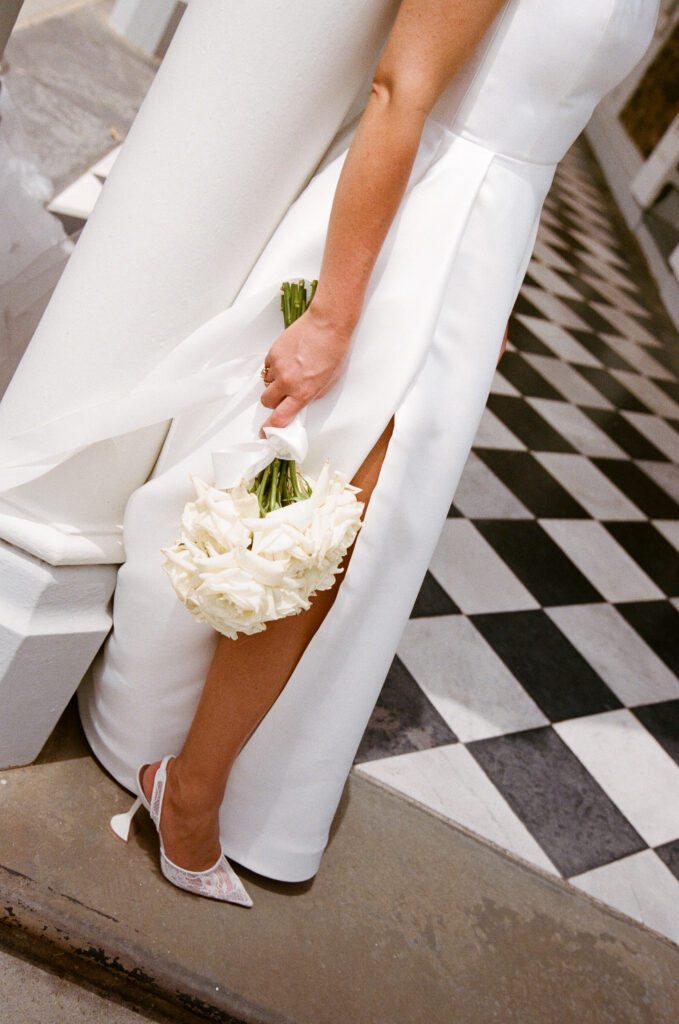
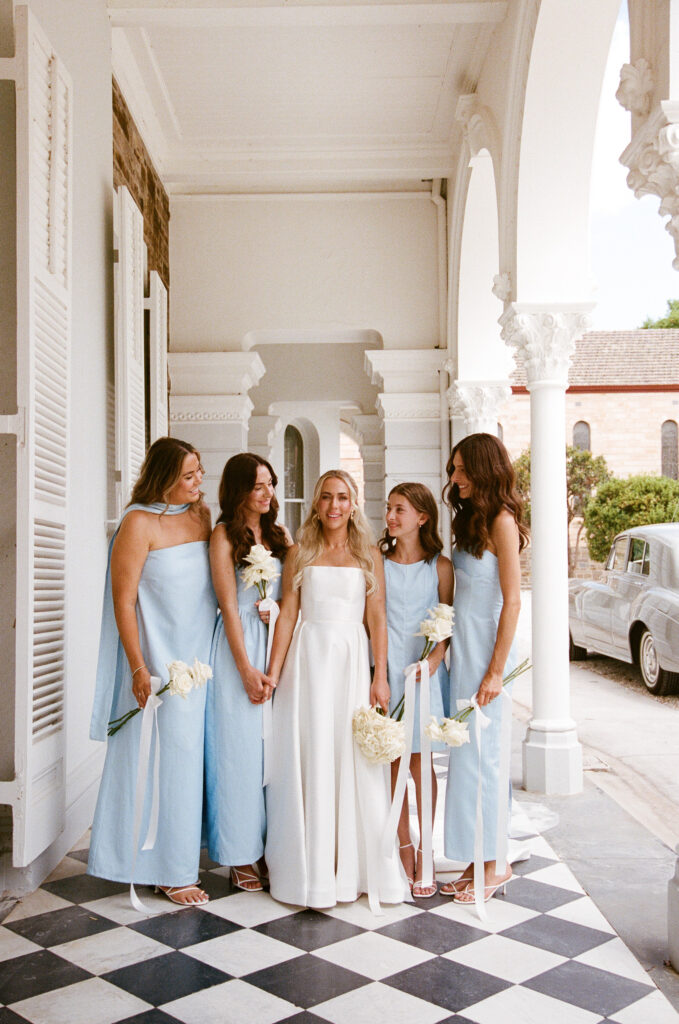
Film Gallery
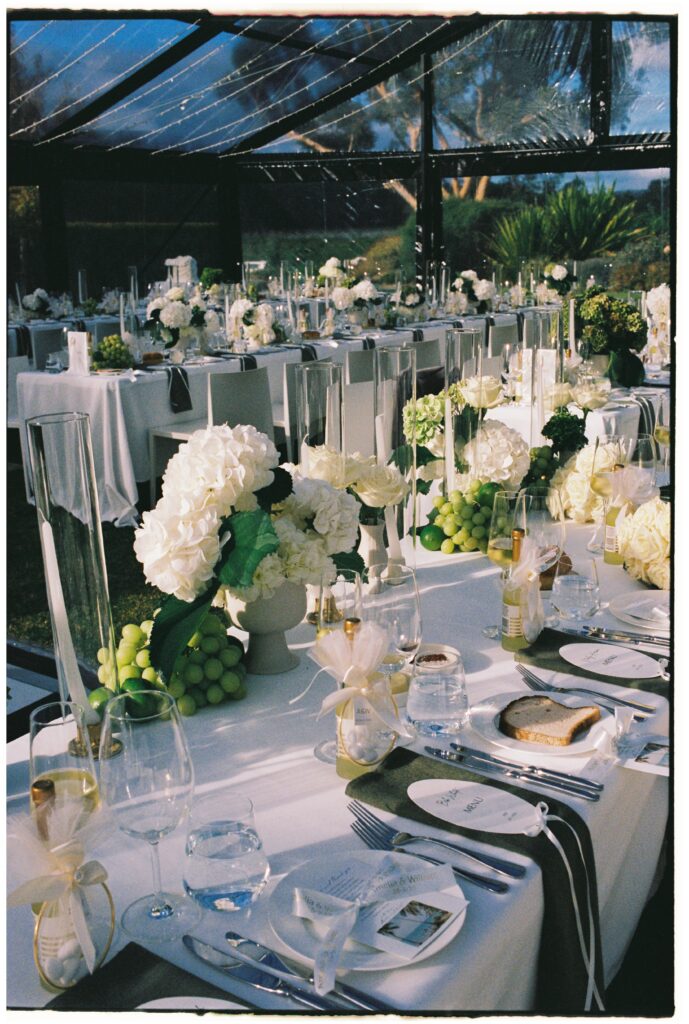
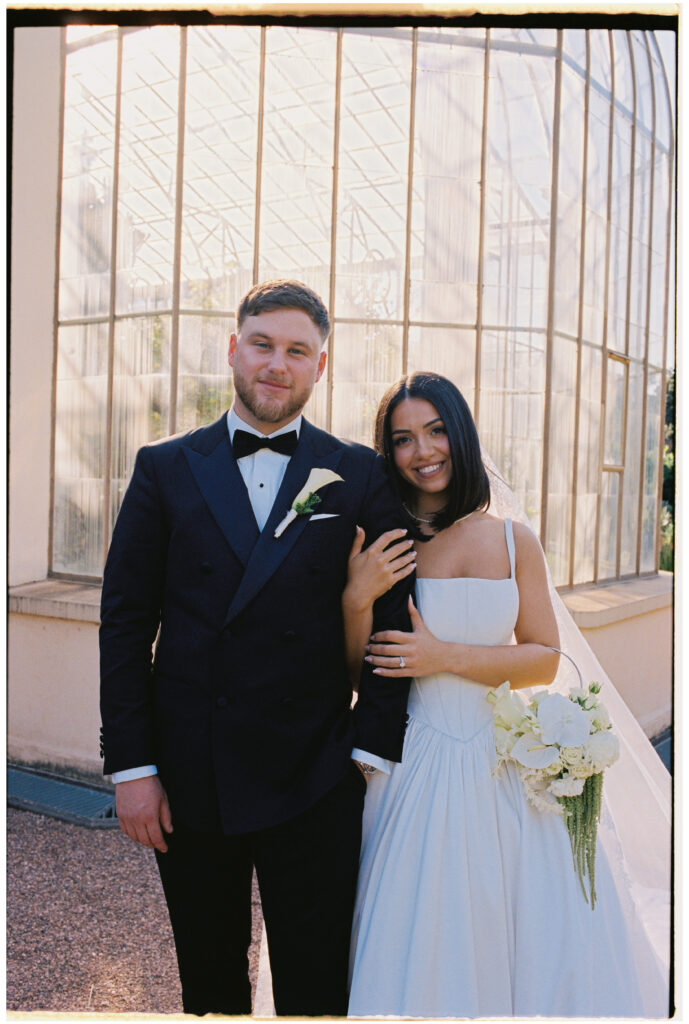
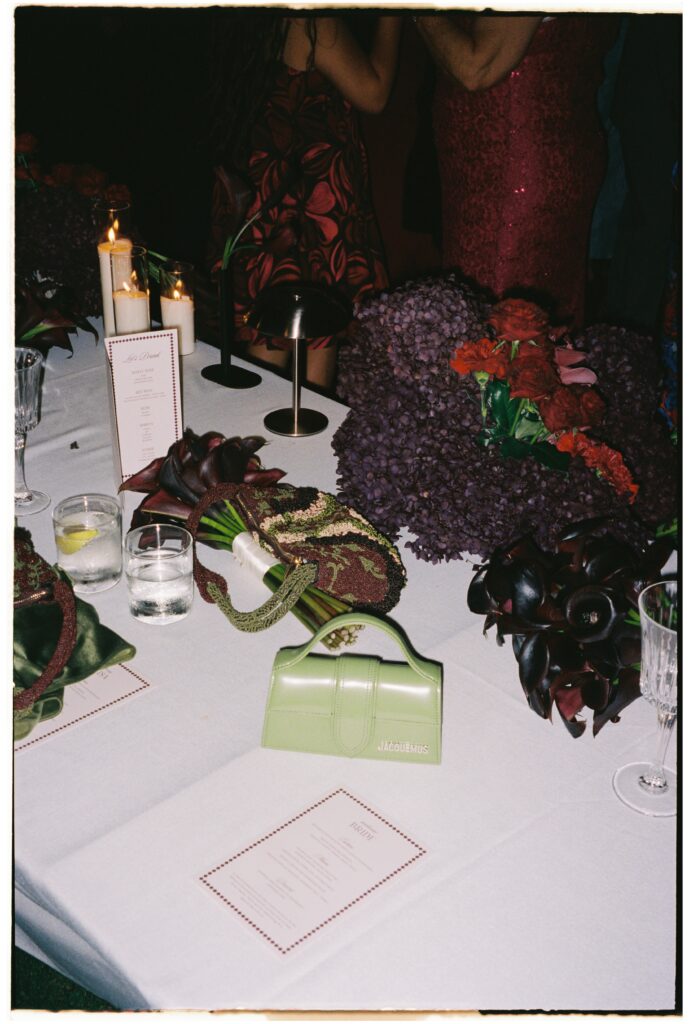
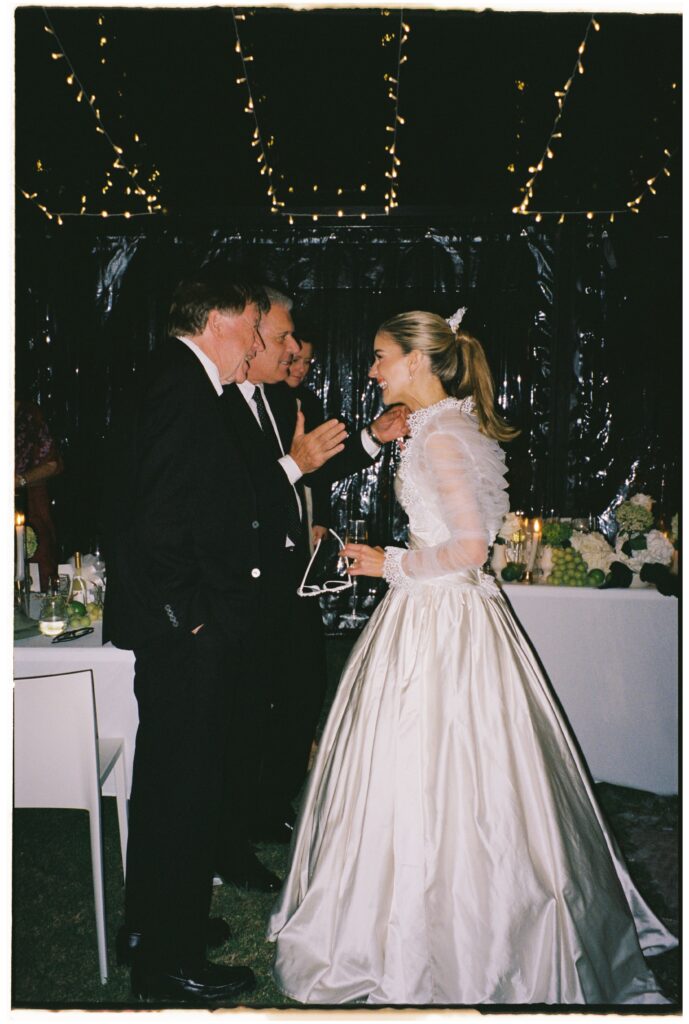
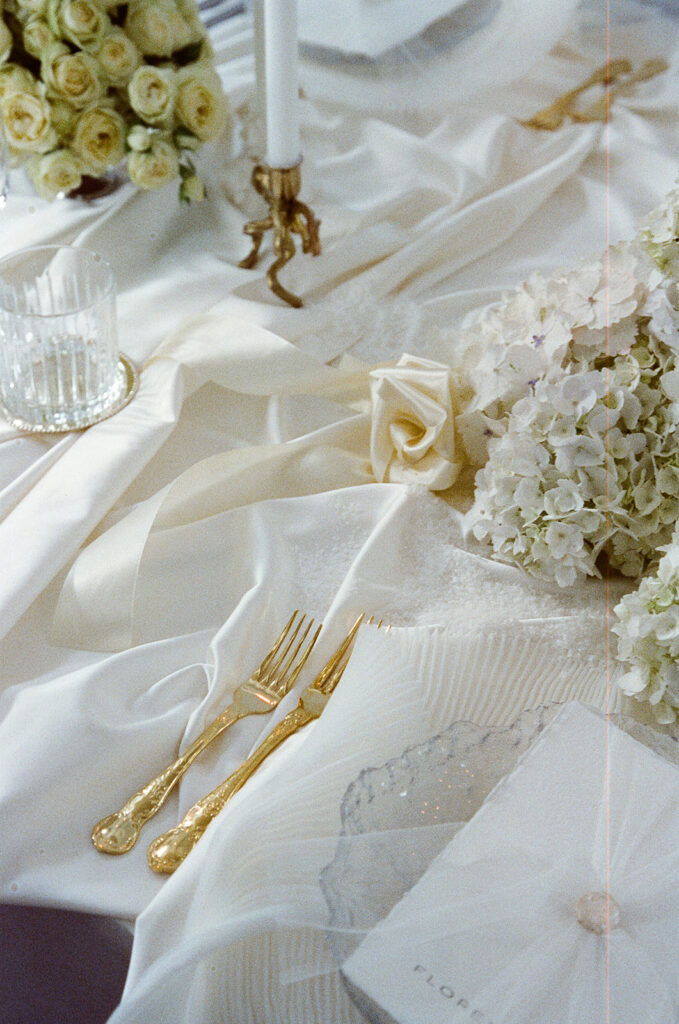
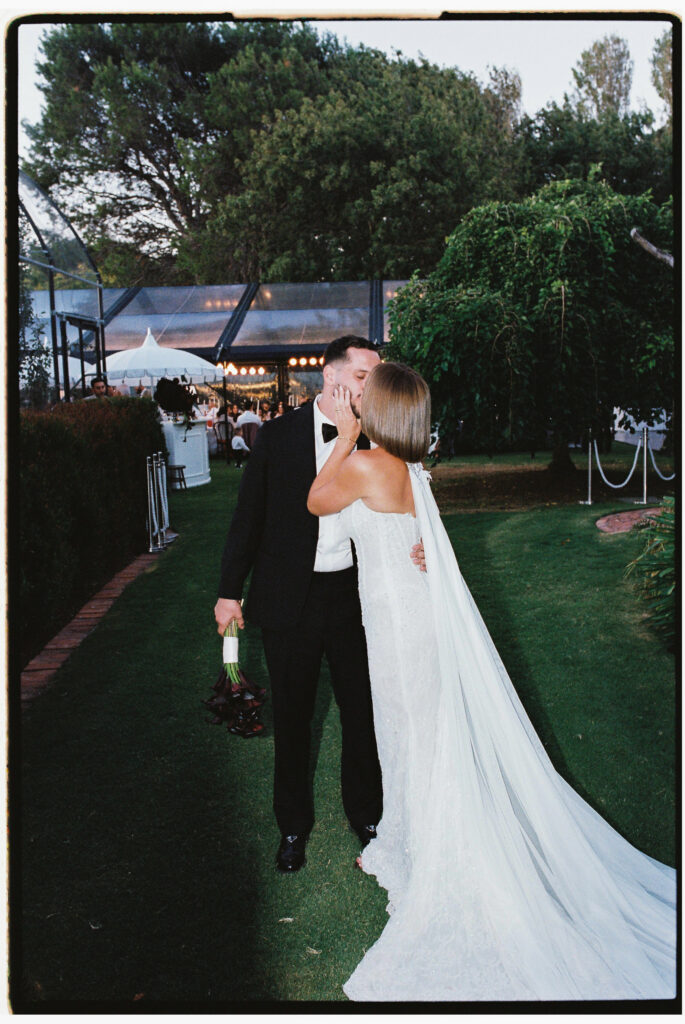
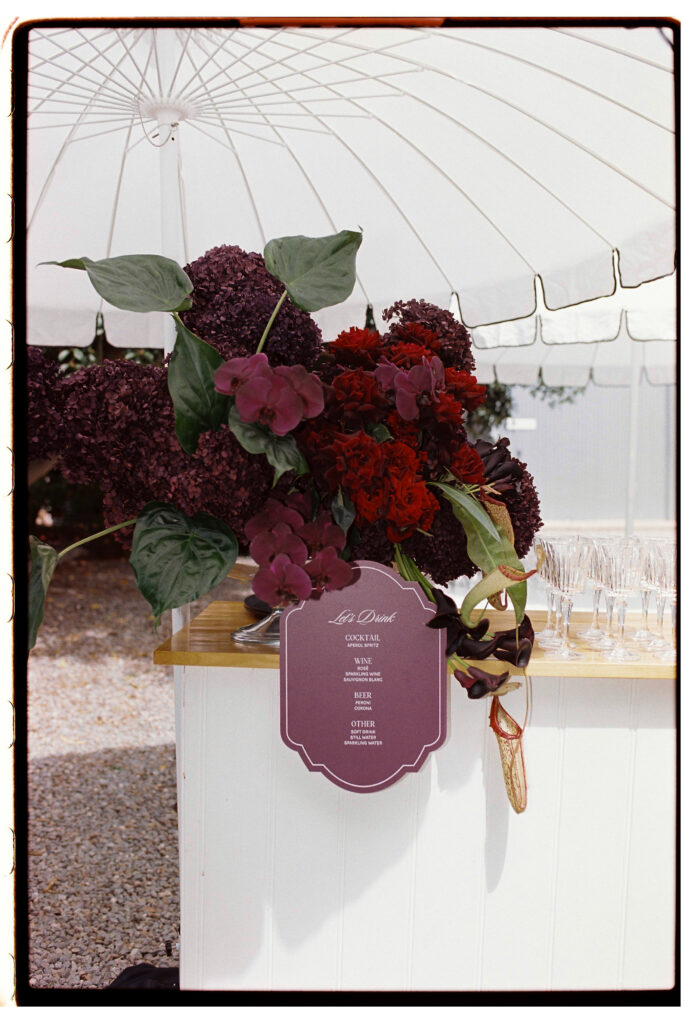
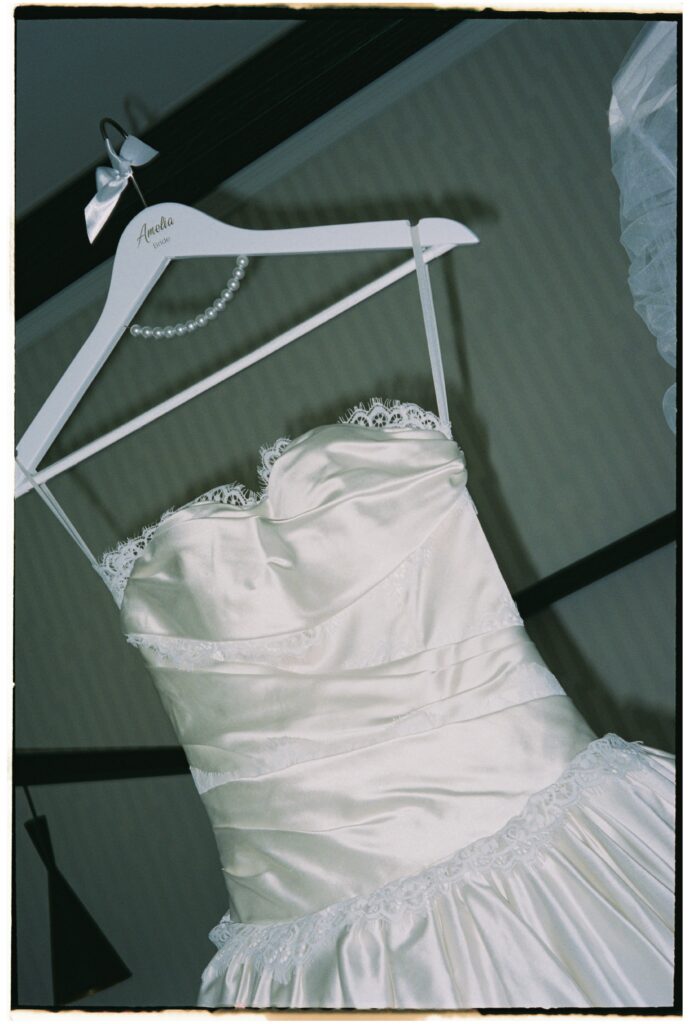
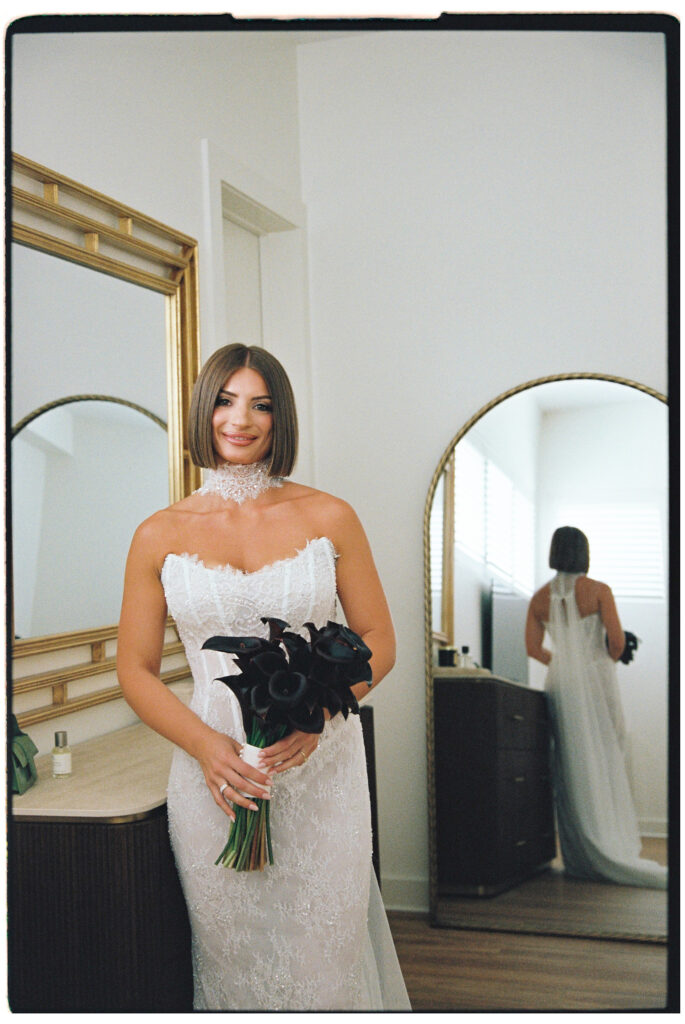
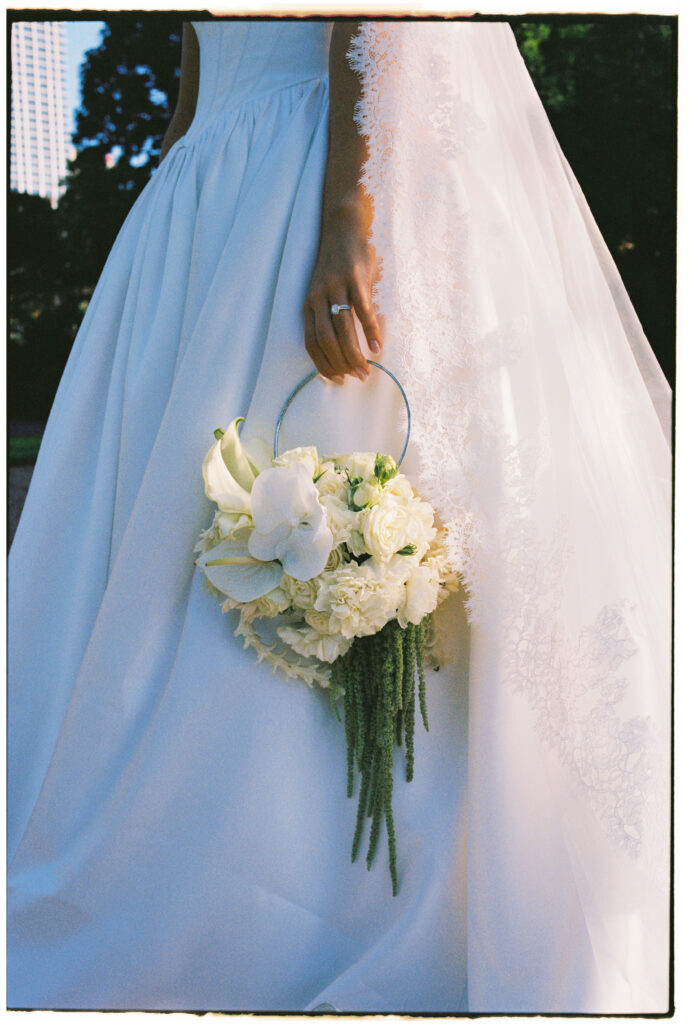
Evelina Katarzyński is a wedding photographer based in Adelaide, Australia, available for weddings nationally and for destination weddings worldwide. She shoots on both digital and 35mm film, and works with a small number of couples each year. If you’re planning a wedding and want photography that feels considered, honest, and entirely yours, get in touch here.
