Evelina Katarzynski
written by
Destination Wedding Trends: What’s Actually Shifting Right Now
From multi-day celebrations to less-saturated European destinations, what’s actually changing in 2026
Planning a destination wedding and trying to separate the genuine shifts from the recycled content? You’re not alone. Most trend roundups cover the same ground and call it done. What I’m noticing from actually photographing destination weddings across Europe this year is something more specific. The mood has changed. The priorities have changed. And some of the places everyone was looking at twelve months ago have started to feel crowded in ways that matter.
This post covers the destination wedding trends that are genuinely shifting right now, updated for where things sit in mid-2026.
Destination Wedding Trends at a Glance
These are the destination wedding trends worth actually building your planning around.
- Multi-day wedding weeks are now the norm. If you’re asking guests to travel internationally, a single-day event is mismatched with that ask. Four to five days gives everyone time to actually be together.
- The most photographed European destinations are saturated. Puglia, rural Umbria, the Portuguese Alentejo and smaller Mediterranean islands are where the quality of experience is quietly outpacing the headline locations.
- Smaller guest lists are a deliberate creative choice. The freed-up budget goes into the experiences, the venue, and the photographer rather than additional headcount, and it shows in the photographs.
- Old World textures and moody colour have replaced minimalism. The cleaner aesthetic of recent years is ageing in photographs. Layered, specific, story-driven design holds up better over time.
- Documentary photography is now the expected standard. Couples want images that look like something was actually happening. The relationship with the photographer is what makes that possible.
- Colour drawn from the place creates a coherence that’s hard to fake. Let the location guide the palette from the start, not the other way around.
1. The Multi-Day Wedding Is Now the Default
This one isn’t new, but it has accelerated faster than most people expected. What was still a considered choice at the start of the year has quietly become the expected format for destination celebrations.
The logic is practical as much as anything. You’re asking guests to travel internationally. A single ceremony feels mismatched with that ask. So the structure has expanded, and most couples planning a destination wedding in Europe right now are building something closer to:
- Welcome drinks or a shared dinner on arrival night
- A day off-site together: a vineyard, a boat, a long lunch somewhere the drive is worth it
- The wedding itself
- A slower recovery morning before people start to leave
Four or five days rather than one.
What this means for your photography
A multi-day celebration gives the photography a proper narrative arc. The best frames from a wedding week are often not the ceremony frames. They’re the reunions on arrival night, the morning light on a group of people too full of good food to perform anything, the last hour of the final dinner when no one wants to leave. Those moments don’t happen in a single-day format. They need time, ease, and the particular looseness that comes from people having been together long enough to relax.
If you’re building a wedding week: invest in coverage across the key moments, not just the main day. The pre-wedding afternoon. The rehearsal dinner that runs two hours over. These are the images couples return to most.emony and reception. Those in-between frames are often the ones couples end up loving the most.
2. Destination Wedding Trends: The Saturated Locations Are Showing It
Lake Como and the Amalfi Coast are still beautiful. They always will be. But prime dates in both are heavily booked, prices have risen sharply, and the experience of being at a venue where two other weddings are happening the same weekend is starting to affect what couples actually want from their day.
The shift toward less-photographed destinations isn’t just about availability. It’s about a different quality of place. Couples who have thought carefully about their wedding aren’t looking for the location that appears on every Pinterest board. They’re looking for somewhere that still feels genuinely specific.
Where couples are looking instead
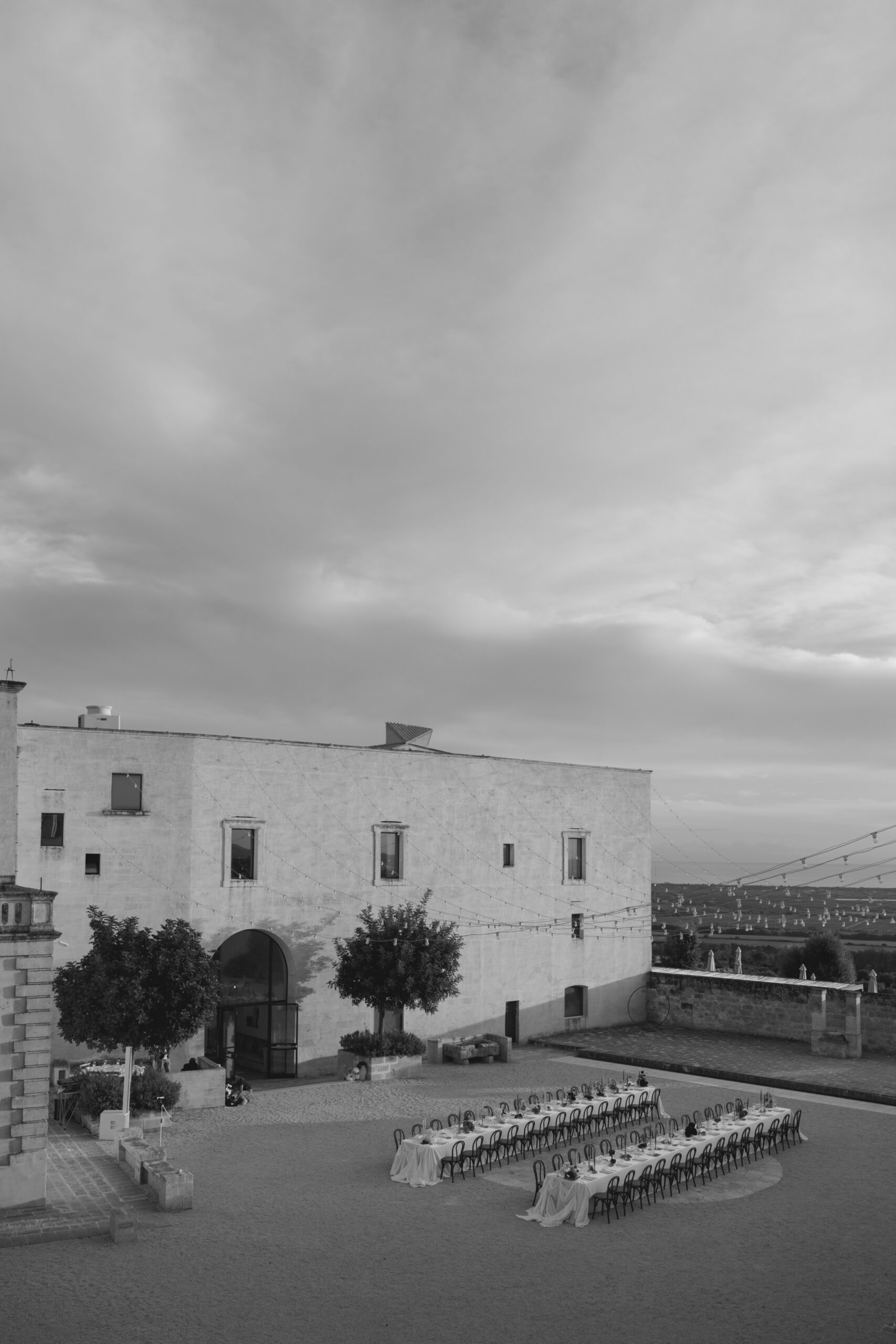
- Puglia, southern Italy — limestone masserie, centuries-old olive groves, a pace that requires you to slow down to match it. I photographed Melanie and Alfredo’s wedding at Masseria Amastuola in Puglia and it’s one of the clearest examples of a location doing most of the work: soft afternoon light, long tables within the central courtyard, a celebration that unfolded without hurry. You can see the full story here.
- Rural Umbria — quieter than Tuscany, less trafficked, and still carrying that particular quality of Italian light
- The Portuguese Alentejo — cork forests, vineyard estates, a version of slow European luxury that hasn’t been overexposed yet
- Countryside estates outside Barcelona — design-led, architecturally interesting, and with the cultural depth of Catalonia behind them
- Smaller Mediterranean islands — the ones that don’t appear in the first page of search results, and feel all the better for it
The question worth asking any location: if you removed all the florals and the styling, would this place still feel like you? If yes, you’re on the right track.
3. Smaller Guest Lists, and the Budget Going Somewhere Better
The move toward smaller, more considered guest lists has continued and sharpened. Intimate destination celebrations, often under 50 to 60 guests, are increasingly the format couples with strong taste are choosing. Not because of budget constraints, but because of what a smaller list makes possible.
What happens to the freed-up budget is the more interesting part of the story.
The extra budget tends to go toward:
- A private estate buyout instead of a hotel wing
- A chef-led dinner on the second night
- A full shared day of local experiences for the whole group
- A photographer whose work they’ve admired for two years and whose process they actually trust
The photographs from a 40-person wedding, where everyone is genuinely close to the couple and genuinely glad to be there, look different from the photographs of an obligation-list of 120. The energy in the room is visible in every frame. Photographs from intimate weddings tend to feel warmer, calmer and more connected, with more time for portraits and real, unscripted moments.
4. Old World Design Has Replaced Minimalism
Minimalism had a good run. It’s quietly showing its age.
What’s replacing it isn’t maximalism. It’s something richer and more specific. Design influences from Art Deco, from European estate heritage, from the textured visual language of old photographs. Colours that feel like they belong to the late afternoon: ochres, deep rosewood, saffron, dusty sage, warm ivory.
In practice, this looks like:
- Layered tablescapes rather than spare, single-stem arrangements
- Candlelight and moody directional lighting rather than clean white neutrals
- Candlesticks, patinated surfaces and fabrics that look like they’ve come from somewhere interesting
- Florals that feel found rather than installed
Why this matters for your photographs
Minimal styling ages in a particular way. Looking back at a decade of clean-lined Nordic-influenced décor, much of it looks interchangeable. The richer, more textured direction photographs with more depth and holds up better over time. Details that have character, a worn stone surface, a wrought iron candleholder, hand-lettered stationery, read differently in an image than a perfectly blank white wall.
Rather than adding more, add things that feel like they have a story. The olive branch on the table rather than a floral installation. A grandmother’s candlesticks. The wine from the estate two kilometres away.
5. Wellness Woven Into the Wedding Week
This sounds like a trend-report buzzword and isn’t. What’s actually happening is quieter: couples are building recovery time and slower experiences into the wedding week alongside the celebrations, and the result is that everyone arrives at the ceremony more present.
A few things I’ve seen work well this year:
- A morning swim or walk before the rehearsal dinner
- A yoga or movement session on the day guests arrive
- A slow breakfast with no agenda before the wedding day begins
- A spa afternoon the day after, before people travel home
These aren’t a content strategy. They’re a response to the reality that destination weddings are both the most exciting and most exhausting things couples have organised, and a few hours of actual rest makes a visible difference in every photograph taken afterward. The couples who built this into the schedule this year have a different quality on the day. People look like themselves. The ceremony frames don’t carry that particular pre-ceremony tension.
You don’t need a full retreat itinerary. One slower morning. One activity that isn’t about alcohol. It shows up in the work.
6. Documentary Photography as the Expected Standard
Film photography and candid documentary coverage are no longer a stylistic niche that certain couples choose. They’re what couples who have spent real time looking at wedding photography are consistently asking for.
The demand is specific: images that look like something was actually happening when they were taken. Not constructed portraits against a sunset, not coordinated group poses. More like:
- The moment before the vows when the couple hasn’t yet managed their expression
- A grandmother’s face during the first dance
- The late reception when shoes are off and nobody is performing anything for anyone
- Two people in conversation in the corner of a room, unaware of the camera
What makes documentary photography possible
The technical side of it, film grain, documentary pacing, analog-influenced editing, is real and worth thinking about. But the more important thing underneath it is the relationship with the photographer. Couples who arrive at their destination wedding already trusting their photographer to find the real thing, rather than directing a shot list, produce a fundamentally different kind of gallery.
Trust is the prerequisite. The photography is what it makes possible.
7. The Destination and the Honeymoon Are Merging
Couples are increasingly arriving a few days early and staying on after guests leave. The wedding becomes the midpoint of a longer trip: time to settle in and breathe before the celebration, then a slower week after to actually be in the place they chose.
This changes the creative possibilities significantly. When I’m at a location with a couple before the wedding, the pre-wedding shoot isn’t squeezed between hair appointments and arrivals. We can find the right light, walk through the location properly, let it be unhurried. Those images, made without the pressure of a wedding day schedule, often end up among the most loved from the whole trip.
If your budget allows for even one extra day with your photographer before or after the wedding, take it.
8. Colour Drawn From the Location, Not Imposed On It
One of the more noticeable design shifts this year: couples letting the destination guide every colour decision rather than arriving with a fixed palette and forcing it onto a place.
The results are weddings that feel cohesive in a way that’s hard to manufacture deliberately. Some examples of how this plays out:
- Puglia: ochres, limestone whites, the warm dusty gold of the afternoon light
- Provence: lavender grey, soft sage, faded terracotta
- The Portuguese coast: ocean blue-grey, bleached linen, natural cork and stone
- Tuscany: the deep green of cypress, amber and gold, aged timber and iron
When colour comes from the place rather than a mood board, the photographs have an internal logic that’s immediately felt. The practical starting point: look at the colours already present in your venue, the stone, the light at different times of day, the surrounding landscape. Start there.
A Note on 2027 Bookings
Worth saying briefly: if you’re planning a European destination wedding in 2027, the booking timeline is tighter than it might feel right now. The most sought-after venues and photographers with a clear creative point of view are filling 2027 dates now, particularly for summer and early autumn.
If you want documentary-led, film-influenced coverage for a wedding in Italy, France, Spain, Croatia, Greece, Poland or elsewhere in Europe, I’m building my 2027 calendar and would love to hear about what you’re planning. I take on a small number of destination weddings each year and every one has to genuinely excite me. Get in touch to start the conversation.
Destination Wedding Trends: Frequently Asked Questions
The destination wedding trends with the most momentum right now: multi-day wedding weeks, smaller guest lists, less-saturated European locations, documentary photography, Old World-influenced design, and colour palettes drawn from the destination itself.
It extends the celebration across several days: a welcome event, a shared experience, the wedding, a slower morning after. For guests who’ve already committed to international travel, it makes the trip feel proportionate. It also gives you real time with the people who made the journey.
Puglia, rural Umbria, the Portuguese Alentejo, countryside estates outside Barcelona, and lesser-known Greek islands. Places with stronger character and a more personal atmosphere than the locations that have been heavily promoted for the past decade.
Choose somewhere with real texture and character, a place that still feels like you when you remove all the décor. Strong natural light, interesting architecture, and a genuine sense of place do the work.
Yes, noticeably. The energy in a room of 40 people who genuinely know the couple looks and feels different from a room of 120. Candid moments are warmer, ceremony frames carry more weight, and the couple tends to be more present.
For European destination weddings, 12 to 18 months ahead is realistic for photographers with a clear creative identity. If you’re planning a 2027 wedding anywhere in Europe, that conversation should be starting now.
Start with the feeling, not the location. How does the day feel when you picture it at its best? The feeling narrows the location. Work outward from there.
If you’re in the early stages of planning a destination wedding and want to know how I approach the photography, this page is a good place to start.
